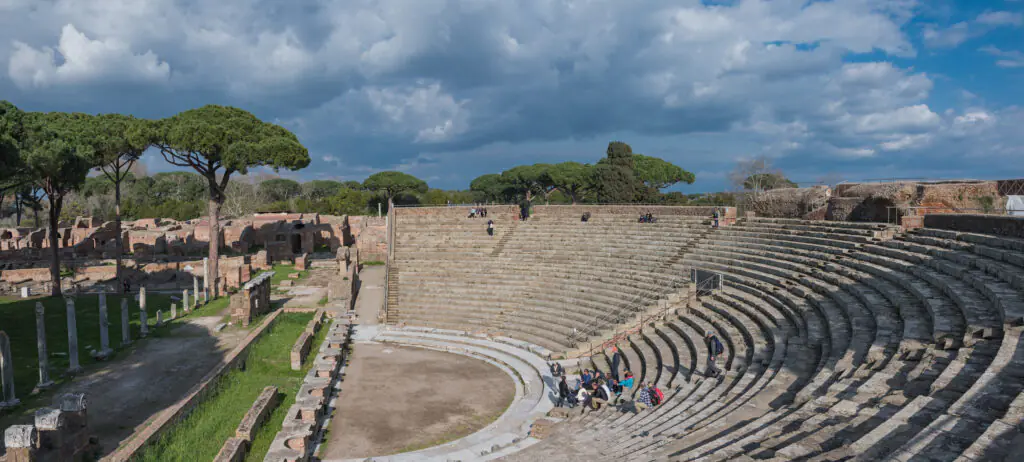
Ancient Ostia
The proximity to the mouth of the Tiber and the coastal salt flats was the main factor that determined the birth and development of Ostia (from the Latin ostium, “foce”), initially for strategic-military purposes, and later primarily for commercial purposes.
Literary tradition traces the founding of the city to Rome’s fourth king, Ancus Marcius (c. 640–616 BC), but the earliest remains belong to the fortified settlement (castrum) of the Roman colony of the 4th century BC. The gradual expansion of the settlement beyond the walls of the castrum led, in the 1st century BC, to the need to build a new and larger city wall.
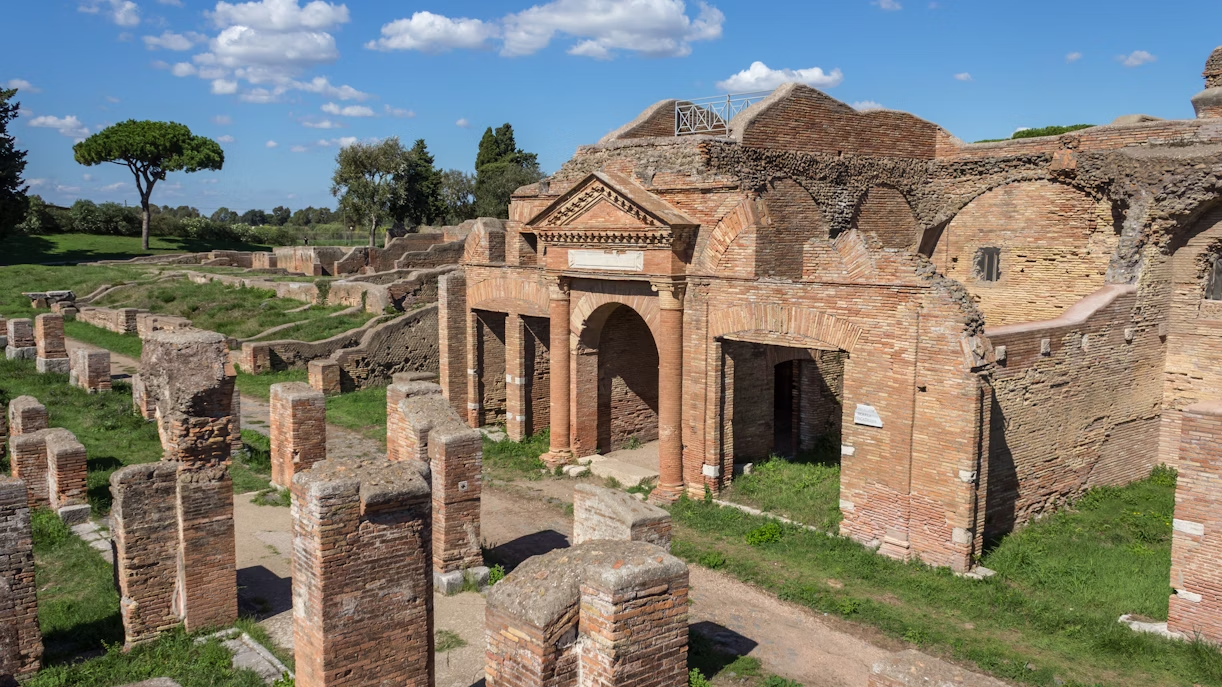
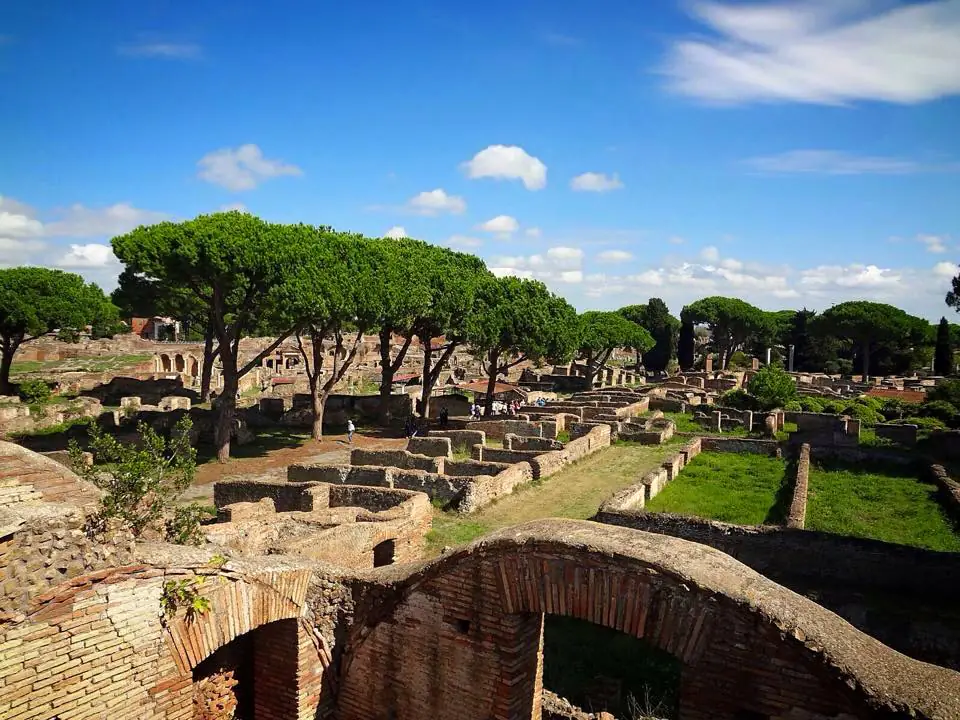
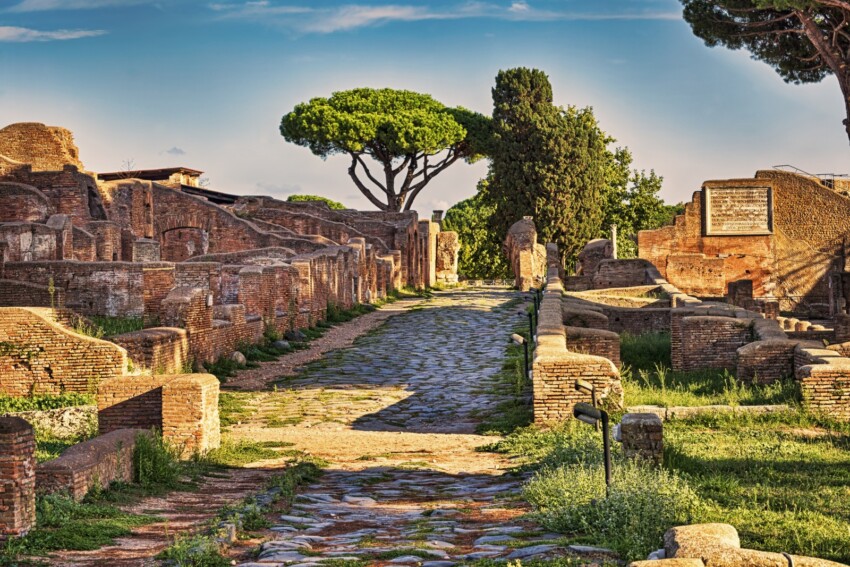
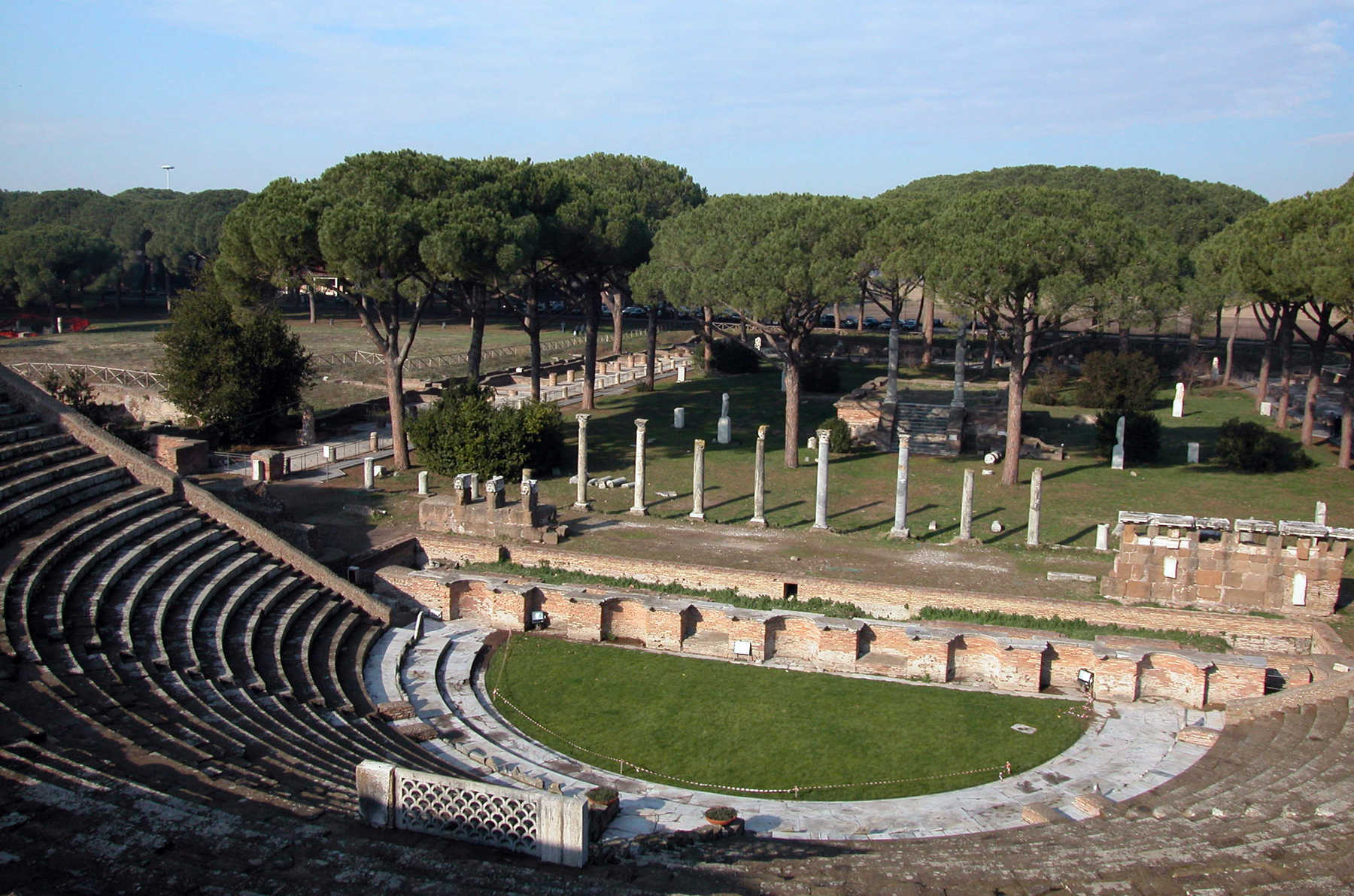
The city was centered around the pre-existing street axes of the Cardo and Decumanus, at the intersection of which the Forum arose. With the construction and subsequent expansion of the maritime port at Portus, between the time of Claudius (42 AD) and Trajan (c. 110 AD), Ostia strengthened its role as Rome’s commercial port; the resulting economic and demographic growth led to an extraordinary building and monumental boom, which, between the end of the 1st and the beginning of the 3rd century AD, completely transformed the city’s appearance according to precise urban planning schemes.
Starting from the mid-3rd century AD, also in connection with a more general crisis of the Empire, Ostia began to decline, leading to the slow and progressive abandonment of large areas of the city, including central ones, where however some wealthy domus settled on earlier residential buildings; the coastal area, centered along the Via Severiana, remained vital for a longer period.
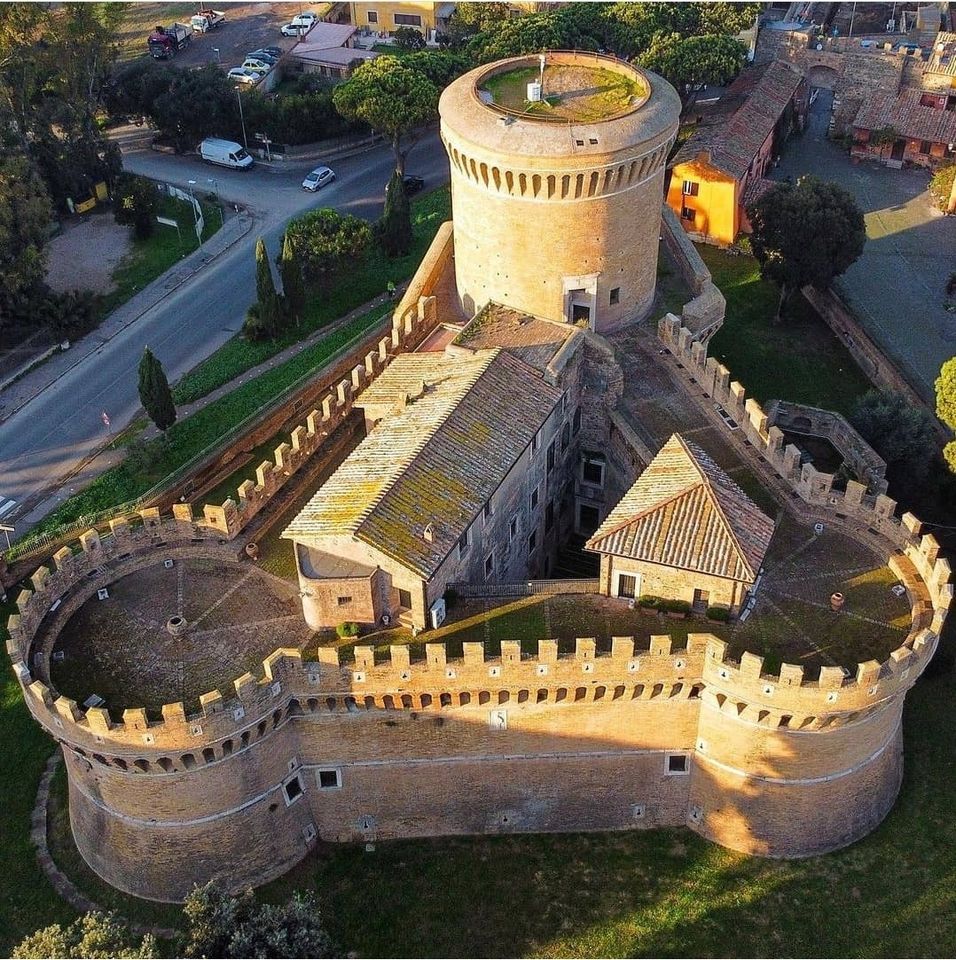
By the mid-6th century, Ostia was generally in a state of abandonment; the population moved to the nearby inland area, around the Church of S. Aurea, where in the 9th century the new fortified settlement of Gregoriopoli arose.