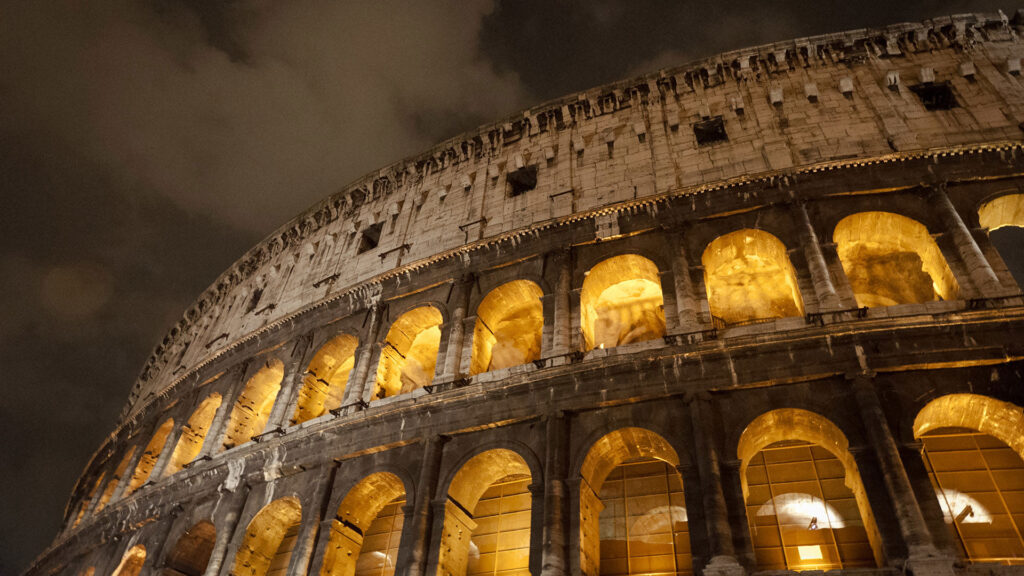
Colosseum
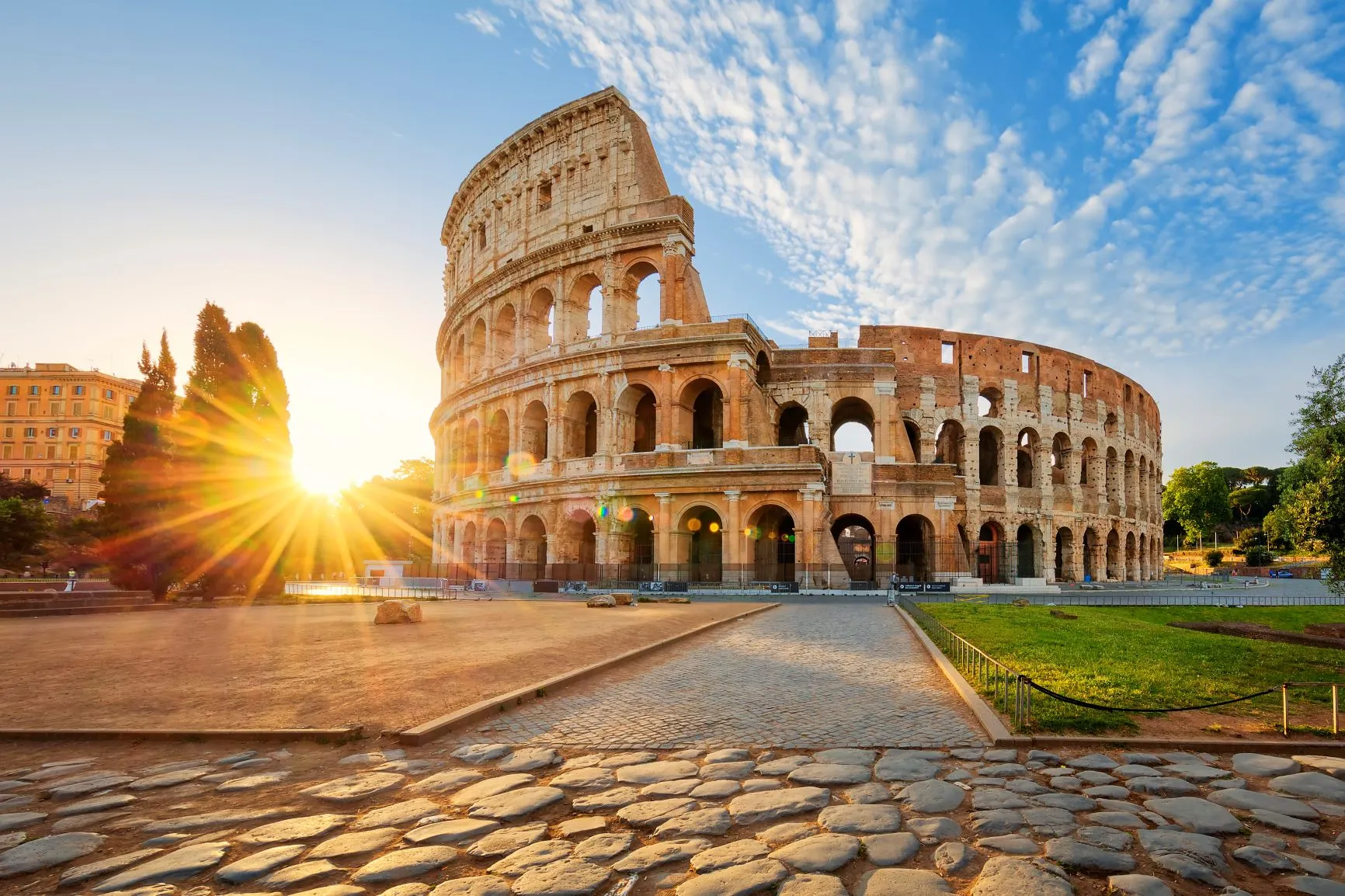
Probably the most famous monument in the world and a symbol of Rome’s grandeur, the Flavian Amphitheater — better known as the Colosseum, named after the colossal bronze statue of Nero that once stood nearby — rises in the city’s archaeological heart and has, for nearly two thousand years, told an uninterrupted story of allure and magnificence.
The Colosseum, which remains the largest amphitheater in the world today, was commissioned by Emperor Titus Flavius Vespasian, who chose to build it in the area between the Palatine, Esquiline, and Caelian hills, previously occupied by the artificial lake of the Domus Aurea di Nerone.
Its construction began in 70 AD and was completed in 80 AD under the reign of Titus, son of Vespasian.
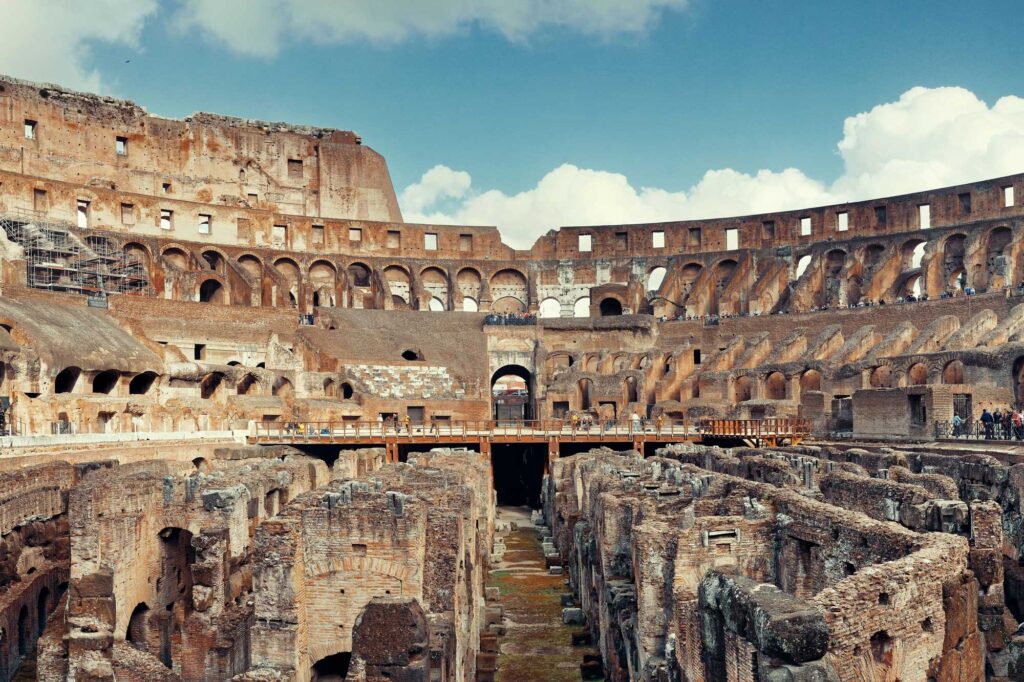
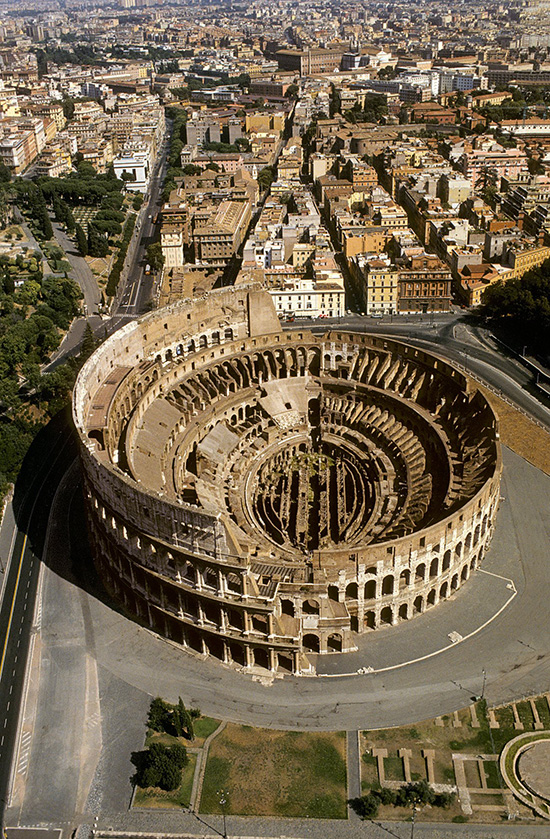
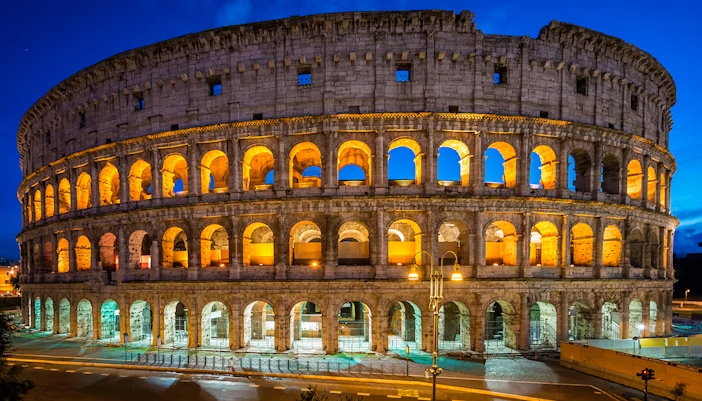
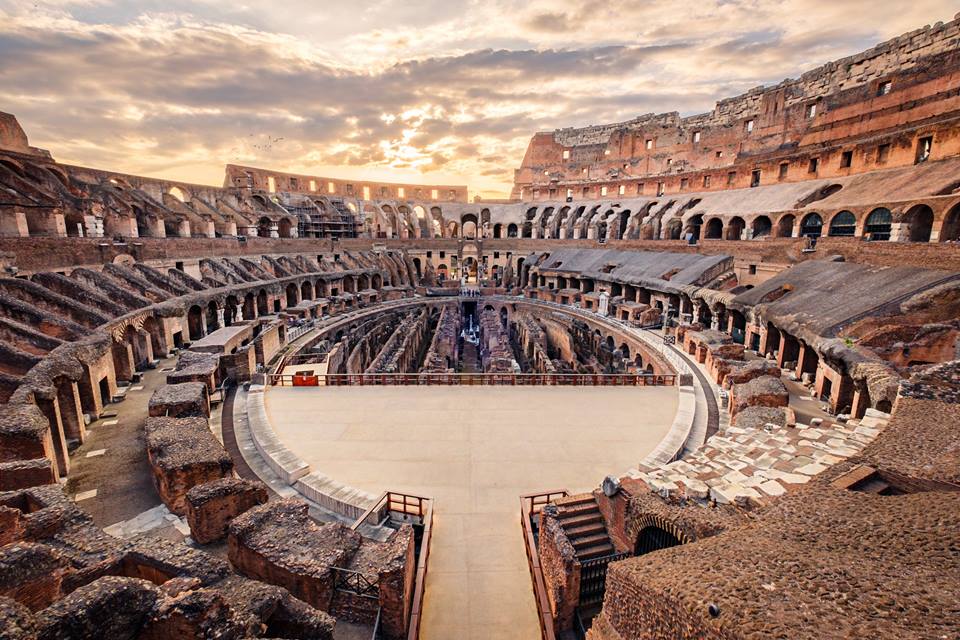
The building was intended for combats and gladiatorial games (munera), and for simulations of hunts with fierce and exotic animals (venationes) and for naval battles (naumachie), it is composed of four superimposed architectural orders; the first three consist of eighty arches framed by half-columns, while the fourth is divided into panels interspersed with windows. Measuring 189 meters long, 156 meters wide, and over 48 meters high, the Colosseum covers an area of 24,000 square meters and could accommodate around 50,000 spectators, who could be seated in the cavea, made up of brick tiers covered with marble. The arena, which measured 76 meters by 46, was constructed with a large wooden platform covered with sand.